Tips for Trucking with Pets

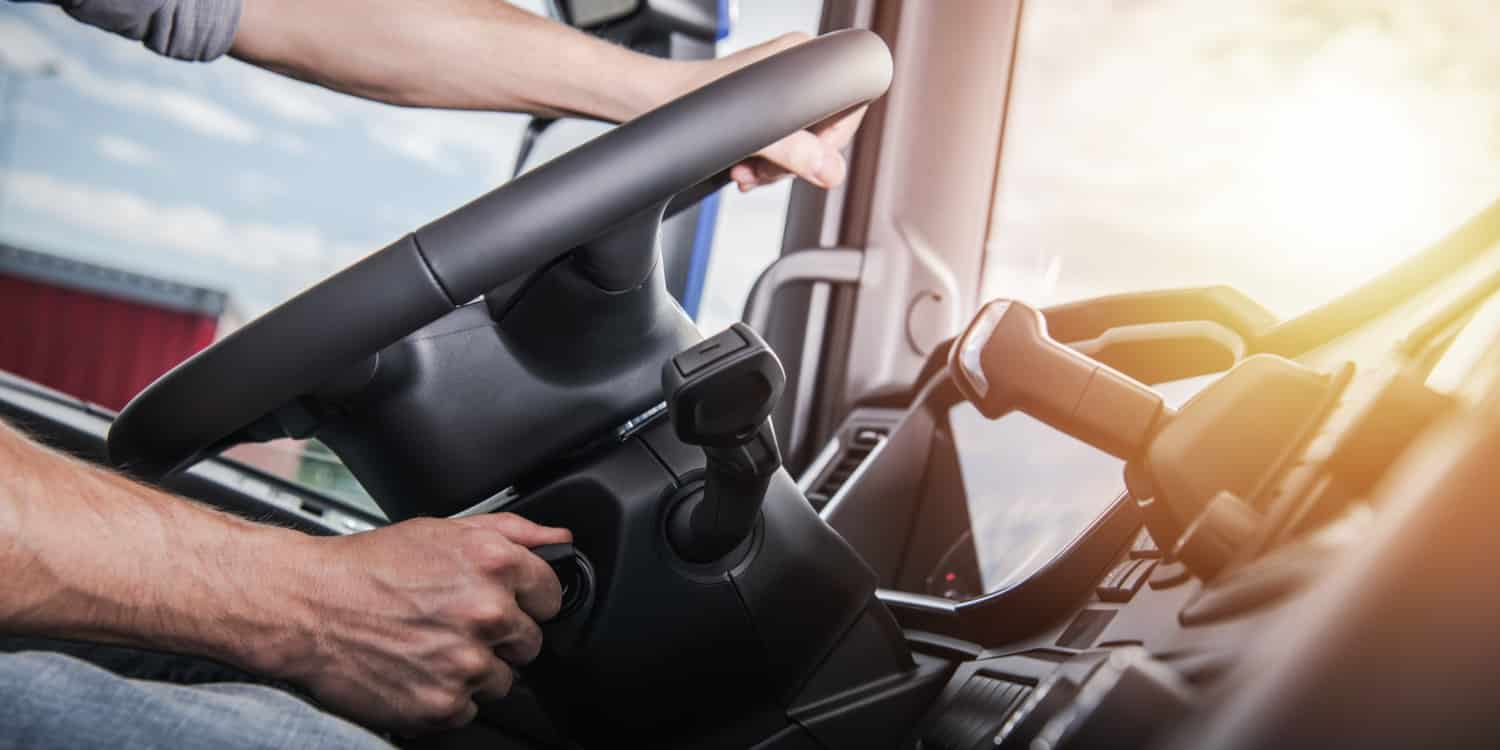
Trucking is one of the few jobs where you can bring your pet with you on a daily basis. Having a pet on your truck has many benefits. It improves your mood, gives you company, and may encourage you to get out and exercise more depending on the type of pet. If you are interested in taking your dog or cat on the open road with you, this article includes some tips to help you out.

1. Know and Follow your Trucking Company’s Pet Policy

There are many pet-friendly trucking companies out there, but this doesn’t mean that every motor carrier will allow pets. Even if the company does let truckers take pets on the road, they may have different requirements to do so. Most will have weight limits, restrictions on “aggressive breeds,” and a pet deposit.

Before you take your pet in your truck, make sure you have checked your motor carrier’s requirements and paid any necessary fees or deposits. If you are just getting started and haven’t gotten your first trucking job, you can find many lists of trucking companies that allow pets online, or ask recruiters directly. Keep in mind that you typically can’t bring your cat or dog with you for on-the-road training even if the company allows pets, so make sure you are prepared for this.

2. Consider Whether Your Pet Would Do Well in a Semi-Truck

If you already have a pet and want to take them on the road with you, make sure to consider their disposition and habits to determine if they would adapt well to life on the road. A big dog that likes to run around in the yard multiple times a day probably won’t enjoy the trucking lifestyle, whereas a smaller dog that is less active might.

In addition to considering your pet’s personality,  make sure to consider their health. Visit your vet before you take your pet on the road and get their recommendations for whether your pet is healthy enough to accompany you. Think of it as your pet’s version of the Department of Transportation (DOT) physical.

3. Prepare, Prepare, Prepare

You’ll quickly learn that preparation is a huge part of being a successful truck driver. From trip planning to meal prepping, what you do before your haul can make a big difference. When taking a furry friend on the road with you, you’ll have another set of tasks to complete to prepare for your trips.

Pet Supplies for Truckers

Make sure you have all of the supplies you need to keep your pet happy and healthy.

You should have:

  • Plenty of food and water
  • Food and water bowls
  • A pet bed
  • A litter box (if you have a cat) or bags/a scooper (if you have a dog)
  • Toys
  • Any medication your pet needs
  • A collar for your pet to wear, plus a backup collar just in case
  • A leash (if you have a dog, or if you have a leash-trained cat)
  • Vaccination and vet records
  • Cleaning supplies (wipes, deodorizer, et cetera)

Trip Planning with Pets

When you make your trip plan, be sure to take your pet into account. Plan for extra stops so they can get out when they need to.

Planning for Emergencies

You should also make a plan for potential emergencies. What will you do if your pet needs veterinary care while you’re on the road, for example? One thing to consider is that vet clinics in pet stores are more likely to have parking that can accommodate semi-trucks, so consider writing down the location of any of these clinics along your route.

Take Your Pet On The Road

If you’re looking for a career when you can keep your pet with you, earn your commercial driver’s license (CDL). Our programs can help you get started in as little as four weeks.  Our job placement assistance team can also.  help you find pet-friendly carriers.

To learn more about our truck driver training programs, contact us today.

What Does the CDL Skills Test Include?

Earning your commercial driver’s license (CDL) is necessary to become a truck driver. To get this license, you will need to pass an exam that includes a written portion as well as a practical skills test. The CDL skills test includes three different portions that cover different things you’ll need to know as a driver.

These are:

Pre-Trip Inspection

Per Federal Motor Carrier Safety Administration (FMCSA) regulations, truck drivers must examine their vehicles prior to every trip. This is to ensure the vehicle does not have any issues that would endanger the driver or anyone else on the road. The first portion of the CDL skills exam is a full internal and external inspection of your truck.

During the test, you will need to fully explain the inspection process to the examiner as you complete it. As you check each part, you must point to or touch it and name it.

Vehicle Control Skills

After the inspection is complete, you will demonstrate your basic vehicle control skills. The examiner can use a variety of off-road tests to evaluate you during this portion of the exam.

Possible Skills Test Drills

Some exercises that may be part of the CDL basic vehicle control skills test include:

  • Straight Line Backing: Backing your vehicle between two rows of cones in a straight line
  • Offset Back/Right or Offset Back/Left: Backing between rows of cones to the left or to the right behind your vehicle
  • Driver Side or Conventional Parallel Parking: Parallel parking in a space on your right or left
  • Alley Dock: Positioning your vehicle parallel to an outer boundary by sight-side backing it into an alley

These exercises are scored based on:

  • Encroachments: Touching cones with any portion of your vehicle or crossing over any boundary lines is an error.
  • Pull-Ups: Stopping and pulling forward too often can be a penalty, although it is not not penalized initially.)
  • “Looks”: Safely stopping your vehicle and checking its position is called a “look” and there is a maximum of two for all exercises besides straight line backing, which has a maximum of one. If you exit unsafely at any time, it can result in an automatic failure.
  • Final Position: You must maneuver your vehicle into the exact position the examiner asked of you and if not, it may result in a failure.

Driving Test

The final part of the CDL skills test involves actually driving through a test route and handling real-life traffic situations. The examiner may ask for you to describe what you would do in a given situation if it doesn’t happen naturally during the test.

Required Driving Skills

Some of the skills the CDL road test may assess:

  • Brake, gear, and clutch use
  • Turning
  • Turn signal use
  • Intersections
  • Steering
  • Lane changes
  • Limited access highway driving
  • Traffic checks
  • Safe following distance
  • Curves
  • Railroad crossings
  • Bridges and overpasses
  • Stop/start

Earn Your CDL at Phoenix Truck Driving School

We prepare our students for the CDL test with a combination of classroom learning and hands-on experience. You can earn your license and start your career in as little as four weeks.

Contact us to learn more about our truck driver training programs.

All About the CDL Tanker Endorsement

Earning your class A commercial driver’s license (CDL) allows you to drive most commercial vehicles, but you will need endorsements for more specialized types of trucks. Our programs include three endorsements: hazardous materials (hazmat), doubles/triples, and tanker. The CDL tanker endorsement is necessary to transport liquids or gases and can increase the job opportunities that are available to you.

Vehicles That Require the Tanker Endorsement

The Federal Motor Carrier Safety Administration (FMCSA) sets regulations for the trucking industry, including endorsement requirements. Per these rules, a tanker endorsement is necessary to drive any vehicle that fits the definition of a “tank vehicle.”

This is any commercial motor vehicle (CMV) that fits the following criteria:

  • Transports fluids (liquid or gaseous material) of any variety
  • Holds the fluid in one or multiple tanks with an individual capacity of 119 gallons or more
  • Carries a total volume of 1,000 gallons or more

This definition is outlined in §383.119 of the Code of Federal Regulations and does not include any vehicle that is transporting empty tanks or intermediate bulk containers (IBCs). However, it does include vehicles that transport multiple smaller tanks, as long as the total volume is over 1,000 gallons.

Do You Need a Hazmat Endorsement As Well?

Many tank vehicle driving jobs require a hazmat endorsement as well as the tanker endorsement. It’s a good idea to get both just in case, even if you don’t think you will need them. Our programs will prepare you for both of these endorsement tests, plus the exam for doubles/triples. The combination of these two will be marked as an “X” endorsement on your CDL. 

Earning the CDL Tanker Endorsement

To earn your tanker endorsement, you will need to pass a written exam, which you will take at the same time as the general knowledge test. The exam includes 20-30 multiple-choice questions about safe fluid transportation.

To study for this test, you should read Section 8 of the CDL manual.

This includes the following subsections:

8.1 – Inspection

There are additional items you will need to check when inspecting tank vehicles compared to standard semi-truck. Most importantly, you need to ensure there are no leaks. Carrying a liquid or gas in a leaking tank is a crime. You will also need to check any special-purpose equipment and ensure you are carrying any necessary emergency supplies.

8.2 – Driving

Driving a tank vehicle requires additional skills and you will need to be aware of the vehicle’s high center of gravity. Surge, which is the movement of liquid in the tank, is also important to understand and account for while driving. You will also need to identify the difference between baffles and bulkheads and should know the rules for loading a tank vehicle.

8.3 – Safety Rules

This subsection covers some key safety rules for driving tank vehicles. You will need to know how to handle curves, skids, and surge. It’s also important to drive smoothly and keep stopping distance in mind at all times.

Earn Your CDL and Endorsements

Our schools will give you valuable skills that will continue to benefit you throughout your trucking career. Our accelerated programs can get you on the road and earning in as little as four weeks.

To learn more about our CDL training schools, contact us today.

Benefits of a Trucking Career

If you are looking to start a new career, you should consider trucking. Whether you are transitioning out of military service, looking for a stable industry, or just wanting to try something new, there are many benefits to becoming a truck driver and we can help you get started.

Some reasons to consider a trucking career include:

1. Excellent Pay

Truckers can make more than $69,000 a year.* You can increase your earning potential as you gain more experience and demonstrate your ability to safely and efficiently haul freight. In addition to base pay, many companies offer sign-on bonuses and other bonuses for safe driving.

2. Employee Benefits

In addition to great pay, many motor carriers offer health, dental, and vision insurance. Other employee benefits include paid time off, 401k plans, and more. Since truckers are in such high demand, companies often compete to offer the best benefits packages.

3. See the Country

If you choose over-the-road (OTR) trucking, your routes will span across the nation. This gives you the opportunity to see the country and get paid to do so. You will travel through scenic areas and depending on the carrier you work for, you may be able to take time off in different locations.

4. Job Security

Semi-trucks haul 70% of the country’s freight and there is a shortage of qualified individuals to drive these vehicles. A report from the American Trucking Associations (ATA) found that the industry was short 60,800 drivers in 2018. As a result, there is a high demand for new drivers and excellent job security for those starting their trucking careers.

5. Make a Difference

Truck drivers are essential for our nation’s economy. Without them, shelves would be empty and gas stations would run out of fuel. Every day you spend as a trucker, you can take pride in knowing you are making a positive difference.

6. Accelerated Training

It’s rare to find a job with so many benefits that requires minimal training and trucking is one such opportunity. You can get your commercial driver’s license (CDL) in as little as four weeks. This means you don’t have to wait to start your new career.

The First Step To Your Trucking Career

If you want to take advantage of the above benefits, the first step is getting your CDL. At Phoenix Truck Driving School, you’ll learn from highly-skilled instructors and we offer job placement assistance. In fact, many of our students have offers before graduation and can start earning right away.

How To Get Started

We have schools in Arizona, New Mexico, and Texas. One of our advisors can help you get started and can answer any questions you have about our programs.

To learn more about CDL training with Phoenix Truck Driving School, contact us today.

*Professional truck drivers earn a mean annual wage of $47,130. The top 10% of truck drivers make more than $69,480 per year according to 2020 Bureau of Labor Statistics.


Preparing for the CDL General Knowledge Test

If you want to become a truck driver, you will first need to earn your commercial driver’s license (CDL). This involves taking two exams: a written test and a skills test. The written test includes sections that you need to pass to earn endorsements, a section to remove the air brakes restriction, and the CDL general knowledge test.

Whereas the endorsement tests are not required to earn your license, the general knowledge test is. After you pass it, you will have your commercial learner’s permit (CLP). This allows you to start on-the-road training under the supervision of a CDL holder.

CDL Manual Sections

To help you prepare for the general knowledge exam, it’s useful to know what this test includes. It covers the following section of the CDL manual: Introduction (1), Driving Safely (2), Transporting Cargo Safely (3), and Combination Vehicles (6).

A basic overview of what each section includes:

Introduction

This gives general information about who needs a CDL and what the process is for obtaining one. It’s helpful to read and understand this section of the manual before you even start school so you know what to expect.

Section 1 of the manual also covers disqualifications and basic rules and responsibilities for CDL holders. Note that this section does not include all Federal Motor Carrier Safety Regulations (FMCSRs), which you will be responsible for knowing and following as a commercial driver.

This section also goes over International Registration Plan (IRP) and the International Fuel Tax Agreement (IFTA) requirements.

Driving Safely

Understanding this section of the CDL manual will help you for the general knowledge exam as well as for the pre-trip inspection test. It gives a list of which parts to inspect and what you need to look for with each one.

After outlining the steps for a vehicle inspection, this section gives information about basic vehicle control. It goes over the basics for a variety of situations and provides general tips for safe driving. It’s important to fully understand these principles before you get behind the wheel of the semi-truck, which is why this section is so extensive.

Transporting Cargo Safely

In this section, you will learn about how to transport cargo safely.

It starts by outlining when you need to inspect your cargo:

  • Within the first 50 miles of your trip
  • After driving for three hours or 150 miles
  • After every break
  • When required by federal, state, or local regulations

You will also need to understand weight and balance requirements and how to secure cargo. Some types of cargo require special attention, including dry bulk, hanging meat, livestock, and oversized loads.

Combination Vehicles

Combination vehicles include tractor-trailers, doubles, triples, and straight trucks with trailers. Note that the double or triple trailers will also require the endorsement for long combination vehicles (LCVs).

This section goes over some of the unique considerations for driving combination vehicles. These include preventing rollovers, avoiding trailer skid, and backing with a trailer.

Earn Your License With Us

If you are interested in becoming a trucker, Phoenix Truck Driving School can help you get started. Our programs can get you on the road and earning in as little as four weeks and we have locations in Arizona, New Mexico, and Texas.

To learn more about how we can help you prepare for the CDL general knowledge test, contact us today.


Class A vs Class B CDL

If you are considering getting your commercial driver’s license (CDL), you have likely heard about the different classes of license available. Most often, you’ll hear comparisons between the class A vs class B CDL. There is also a class C license, although this is less common.

So, which class of CDL do you need to become a truck driver? The short answer is that a class A license is more universal and is usually a better option. However, if you are planning to drive a smaller truck, a class B CDL may be enough for your needs.

What Vehicles Require a Class A CDL?

You will need a class A commercial license to drive a combination vehicle with a gross vehicle weight rating (GVWR) of 26,001 pounds or more and a towing capacity of more than 10,000 pounds. A standard semi-truck is a type of combination vehicle since it has two different parts: the tractor and the trailer.

The majority of over-the-road (OTR) trucking jobs require a class A CDL. Given the expense to ship freight over a long distance, it makes sense that the vehicle would need to be larger in order to be more efficient.

With a class A license, you can also drive vehicles that require a class B CDL. This is true as long as you have all the necessary endorsements in order to do so.

What Vehicles Require a Class B CDL?

There are two types of vehicles that fall under the requirements for the class B license. You can operate a vehicle with a GVWR of 26,001 pounds or more without an attached trailer or a combination vehicle hauling a trailer that weighs less than 10,000 pounds.

With a class B CDL, you can drive straight trucks/box trucks (including many delivery vehicles), buses (with the proper endorsement), and construction vehicles.

This license also meets the requirements for class C vehicles, which include smaller vans with more than 16 passengers and other miscellaneous commercial vehicles.

Which License Should You Earn?

In most cases, earning a class A CDL is a good choice. This gives you more flexibility in choosing a career. Even if you decide to drive a smaller vehicle instead, you will keep your options open.

Additionally, most regional or local jobs that involve a class B vehicle require previous experience. It is usually easier to get your foot in the door with an OTR job, at least for a year or two. A class A CDL allows you to do this.

However, there may be some circumstances when a class B CDL is sufficient. If you already know which company you will be working for and you know that they only require a class B license, it may be quicker to just earn this license. If you do this, you should be confident that you will not want to switch to a class A vehicle in the future. In the case that you do need to earn your class A license later, you may need to go back to school to do so.

Get Your Class A CDL

Phoenix Truck Driving School offers high-quality class A CDL training. You can earn your license and hit the road in as little as four weeks with our accelerated programs.

To learn more about becoming a truck driver, contact us today.

Understanding the Hazmat Endorsement

In addition to the standard commercial driver’s license (CDL), there are a variety of endorsements. These are additional certifications you can add to your license by passing written exams in addition to the general knowledge test. The hazardous materials (hazmat) endorsement is one example and allows you to transport potentially dangerous substances.

Why Earn the Hazmat Endorsement?

Endorsements widen the range of CDL jobs that are available to you. With a hazmat endorsement, you can haul many types of specialized freight, including fuel. In most cases, a tanker endorsement will also be necessary. This is because many hazardous materials are in a liquid or gaseous form.

Jobs hauling hazmat require attention to detail and extreme care. They will typically pay more than other types of freight because of the heightened responsibility.

Keep in mind that you will almost always need prior trucking experience to get a hazmat job. Most require a year or more of accident-free over-the-road (OTR) driving. So, why not wait to earn your endorsement? The simple answer is it requires more work for you to go back in and take another written test once you decide you want to pursue a career in hazmat hauling compared to taking all of the exams at one time. Even if you never use the hazmat endorsement, it’s nice to have it available.

What You Need to Earn Your Endorsement

In addition to meeting the requirements for a standard CDL, you will need to pass a background check for the hazmat endorsement. The Transportation Safety Administration (TSA) runs this check.

You will then need to pass the written exam. This includes multiple-choice questions that come from Chapter 9 of the CDL Manual. This chapter covers hazmat safety and regulations and includes 7 subsections.

These subsections are:

1. The Intent of the Regulations

You will need to understand why hazmat regulations are necessary. The manual lists three broad goals: “contain the material,” “communicate the risk,” and “ensure safe drivers and equipment.”

2. Who Does What

Each individual or organization involved in transporting potentially dangerous substances has an important role to play.

As a brief overview:

  • The shipper prepares the shipment according to regulations.
  • The carrier checks that the shipper prepared the shipment correctly and reports accidents to proper authorities.
  • The driver double-checks that both the shipper and the carrier have followed regulations and transports the freight safely.

3. Communication Rules

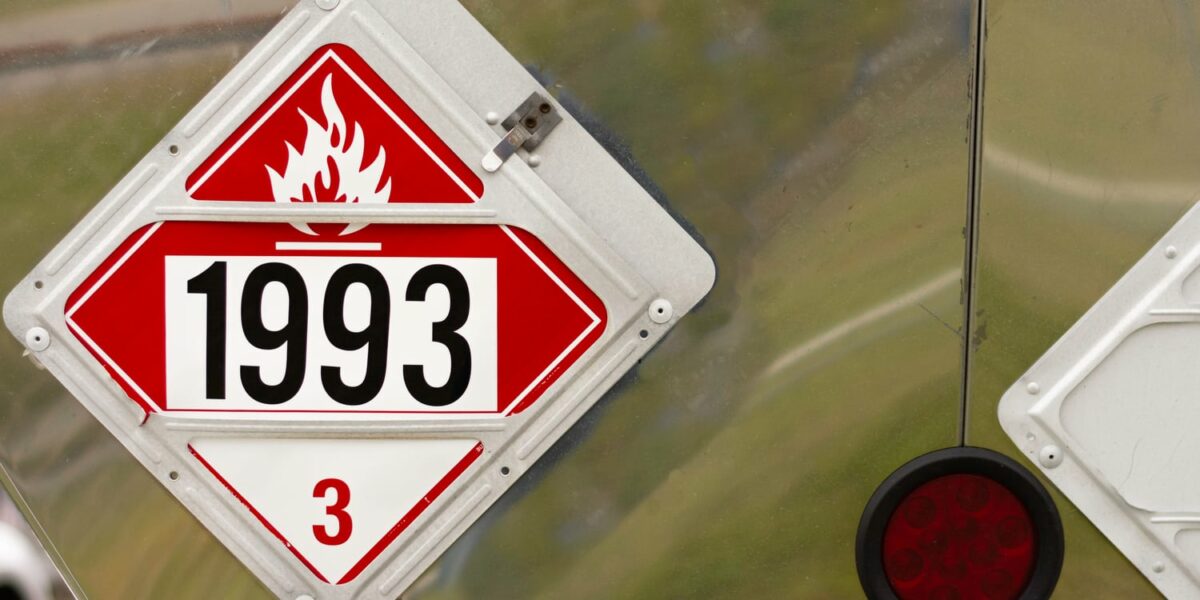
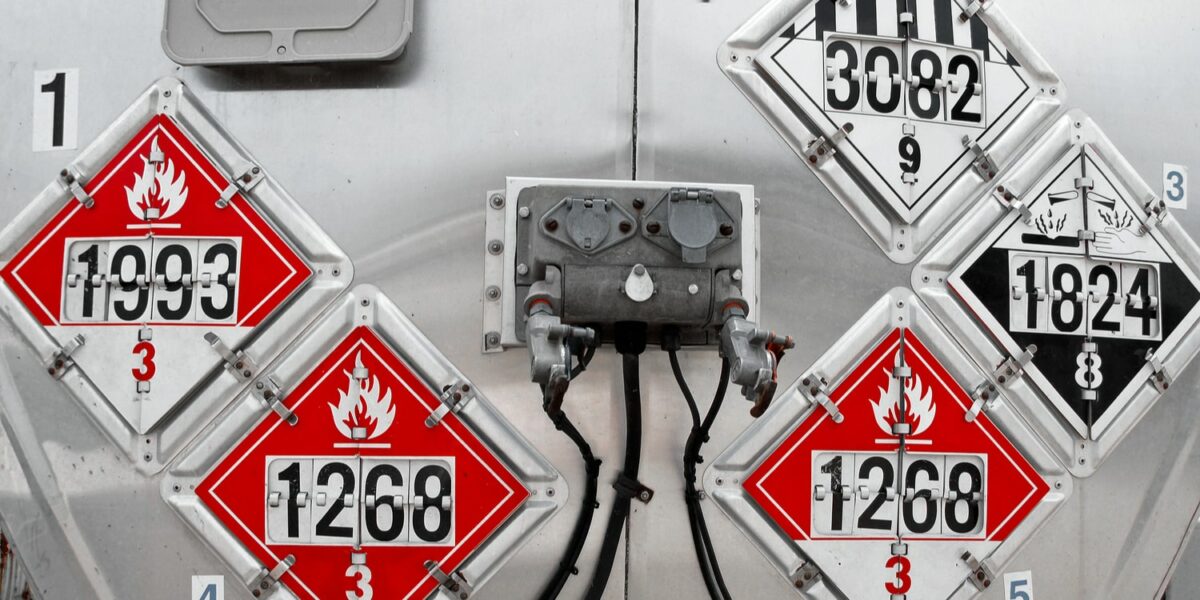
This section of the CDL manual outlines the different classes of hazmat. The shipping papers must list the proper class. Additionally, any vehicle hauling hazmat must have one or more placards outlining the class(es) of the freight. You will need to know how to identify hazardous substances correctly.

4. Loading and Unloading

Subsection 4 gives requirements for loading and unloading hazmat. After studying this section, you should understand the general rules that apply to all types of potentially dangerous substances as well as specific regulations for various classes.

5. Bulk Packaging

There are specific requirements for hazmat in bulk packaging. This includes tank vehicles. In addition to these rules, keep in mind that you will need to earn your tanker endorsement to transport hazardous substances in a tank truck.

6. Driving and Parking Rules

Parking a vehicle with hazardous materials is different from parking a standard dry van. There are some areas where you cannot park a vehicle with these substances. Certain classes, namely explosives, have additional requirements.

7. Emergencies

It is important that you know how to handle any emergency that could arise while transporting hazmat. This section covers how to respond to crashes, fires, and other issues.

Earn Your Hazmat Endorsement

All of our Phoenix Truck Driving School locations offer the hazmat endorsement. We can help you start your trucking career with the skills you need to succeed and can get you on the road in as little as four weeks.

To learn more about our CDL training in Arizona, New Mexico, and Texas, contact us today.

Trucking Terms to Know

Throughout your training and into your career, you are likely going to hear a wide variety of trucking terms. The industry has its own unique vocabulary, and this article gives definitions for some of the most common trucking-related acronyms, words, and phrases.

Definitions Related to Training

  • CDL – A commercial driver’s license (CDL) is required to drive a commercial vehicle. You earn this license by passing a written test and a skills test.
  • CLP – After passing the written portion of the CDL test, you will earn your commercial learner’s permit (CLP). This allows you to drive a commercial vehicle under the supervision of a CDL holder.
  • Endorsement – There are additional written tests you can take during your CDL exam and passing these gives you endorsements, which are added qualifications that allow you to drive specialized vehicles.
  • Restriction – Whereas endorsements give you the ability to drive more types of vehicles, restrictions limit what/how you can drive. For example, having the air brakes restriction on your license means you can’t drive a vehicle that uses air brakes.

Definitions Related to Regulation

  • DOT – The Department of Transportation (DOT) regulates the trucking industry.
  • Drug Testing Consortium – Drug testing is a requirement for all commercial drivers. Some companies use consortiums, which combine the testing pools of multiple motor carriers into one larger pool for random testing purposes.
  • ELD – Most long-haul truckers are required to use electronic logging devices (ELDs) to track the number of hours that they drive.
  • FMCSA – The Federal Motor Carrier Safety Administration (FMCSA) is a sub-agency of the DOT and sets regulations that trucking companies must follow.
  • HOS – There are limits for the number of hours a trucker can drive and be on duty before they must take a break, and these are known as hours of service (HOS) regulations.
  • Placard – Trucks carrying hazardous materials (hazmat) are required to display a placard that gives information about the substances that are being transported.

Definitions Related to Trucking Careers

  • DAC Report – Many trucking companies use Drive-a-Check (DAC) reports for hiring purposes. It is required for motor carriers to check the motor vehicle record (MVR) of new drivers, although this does not always have to be using DAC reports specifically.
  • Dry van – The most straightforward type of truck driving is transporting non-refrigerated goods and materials, known as dry van.
  • Flatbed – Flatbed semi-trucks haul a platform instead of an enclosed trailer and freight must be tied down to keep it secure. This type of vehicle is often used for oddly shaped or oversize cargo, and flatbed jobs typically pay more than dry van hauling.
  • Linehaul – Linehaul jobs involve traveling between two terminals for a less-than-truckload (LTL) freight company. They tend to be more predictable and involve more home time than long-haul trucking.
  • LTL – LTL shipping allows multiple companies to send a smaller amount of freight, which is sorted at terminals. LTL jobs include linehaul and pick-up and delivery (P&D).
  • OTR – Over-the-road (OTR) is what most people think of when they think of trucking. It involves staying on the road for weeks at a time and traveling across the country to deliver goods and materials.
  • Owner-Operator – An owner-operator truck driver owns their semi-truck and will either contract with a motor carrier or find their own freight with load boards. Being an owner-operator is one of the highest-paid career options in trucking but requires an initial investment to purchase a vehicle and comes with additional responsibilities.
  • Pay-per-mile – Most long-haul trucking jobs are pay-per-mile. The rate is usually given in cents per mile (CPM) and the mileage can be calculated in a variety of ways depending on the company.
  • P&D – Whereas linehaul LTL drivers travel between terminals, P&D drivers pick up shipments at the terminal and bring them to customers, or vice versa. These jobs involve a lot of city driving but typically allow drivers to be home each night.
  • Reefer – Refrigerated trucks (reefers) haul temperature-controlled items, often fresh food. These jobs are in high demand year-round but do require care and attention to make sure the temperature stays constant.
  • Tanker – Tank vehicles, also called tankers, transport liquids, gases, or dry bulk. Fuel trucks are one of the most common varieties. If the freight is a fluid, the tanker endorsement is required.

Learn More About the Trucking Industry

At Phoenix Truck Driving School, we give our students the knowledge and skills they need to succeed. We help you learn about the trucking industry and our programs allow you to earn your CDL in as little as four weeks.

To get started on the road to a trucking career, contact us today.

Local, Regional, or Over-the-Road Trucking?

After earning your commercial driver’s license (CDL), there are many career decisions you will be able to make. Before deciding what type of freight you want to haul and what company you will work for, one of the big-picture choices is what length of route you are interested in. There are three main categories: local, regional, and over-the-road/OTR.

It’s most common to start out with over-the-road trucking because you will gain the experience that the majority of local and regional companies look for. However, some shorter routes do hire new drivers and it can also be helpful to think about your long-term career goals when starting out. Understanding the differences between local, regional, and OTR hauls can help you plan for your future as a trucker.

Over-the-Road Trucking

OTR is what most people imagine when they think of a trucking job. It involves spending multiple weeks at a time on the road hauling goods and materials. The length of each route varies, but you can expect to travel throughout all of the continental United States. Some companies even travel into Canada or Mexico, although there are additional considerations for international routes.

Over-the-road jobs are the most common for new drivers because they give you time to get more comfortable handling a semi-truck. Local and regional jobs often require you to handle difficult driving conditions more often such as night driving, navigating a city, and potentially backing into loading docks or businesses without loading docks multiple times a day. OTR will give you exposure to all of these, but it is more spaced out. For this reason, many local or regional carriers will prefer to hire drivers with one year or more of over-the-road experience.

Pros

  • Higher pay, especially for specialized freight or experienced drivers
  • See the country while earning high pay
  • Most typical of the trucking lifestyle, which many drivers who thrive in OTR jobs find exciting

Cons

  • Time away from home
  • May not be ideal if you don’t enjoy the lifestyle of long-haul trucking

Examples of OTR Jobs

  • Dry van
  • Reefer trucks
  • Flatbed trucking
  • Any freight that must travel a long distance to reach its destination

Regional Jobs

In most cases, the day-to-day life of a regional trucker is fairly similar to that of an OTR driver. The difference is the regional routes involve less time on the road at once, usually 1-2 weeks. Many of these jobs allow you to be home every weekend. The routes run through one region of the country. West coast runs are one example.

Pros

  • Pay is usually greater than local jobs
  • More home time than OTR
  • Still involves some travel and aspects of the trucking lifestyle

Cons

  • Often more competition for jobs than OTR
  • Will typically pay less than OTR
  • More likely to have a set “routine,” which can be a pro or con depending on your preferences

Examples of Regional Jobs

  • Linehaul driving for less-than-truckload (LTL) freight
  • Many types of freight that travel OTR also have regional routes available (dry van, reefer, flatbed, etc.)

Local Driving

Local driving jobs allow you to stay close to home. They are more competitive and often require more experience before you will be hired. This is because most local positions require a great deal of city driving and you will need to know how to maneuver a large vehicle in tight areas.

Pros

  • Home daily or nightly
  • Ability to become familiar with the routes and routine

Cons

  • Competitive hiring processes
  • Lower pay than OTR or regional, although this can change with time and depend on the company
  • Traveling the same routes every day can become boring, depending on your personality/preferences

Examples of Local Jobs

  • LTL pick-up and delivery (P&D)
  • Delivery trucks
  • Passenger-carrying jobs (shuttles, limousines, buses, etc.) with the appropriate endorsement
  • Some types of specialized freight

Start Your Driving Career

No matter what type of route you are interested in, Phoenix Truck Driving School can help you get started. We offer programs in Arizona, New Mexico, and Texas and can get you on the road and earning in as little as four weeks.

To learn more about how we can help you start your local, regional, or over-the-road trucking career, contact us today.

Your Guide to CDL Endorsements

A class A commercial driver’s license (CDL) gives you the ability to operate most types of commercial vehicles, including semi-trucks. However, some specialized types of trucks or varieties of freight require additional certifications. CDL endorsements can be added to your license; to earn one, you’ll need to pass additional written exams.

Our schools cover material for the following endorsements:

Hazmat

The Hazardous Materials (hazmat) category includes a variety of substances that the U.S. Department of Transportation (DOT) has labeled as potentially harmful. Hazmat haulers can earn more per mile, although these jobs come with additional responsibilities and strict requirements for routes and procedures. This endorsement also requires a background check through the Transportation Security Administration (TSA).

Tanker

Tank vehicles, also called tankers, transport liquids or gases. Some tankers transport dry bulk, although these do not require an endorsement to operate. You will need to understand the unique considerations for hauling fluids, including surge. In many cases, jobs will require both tanker and hazmat endorsements. This combination is known as the X endorsement.

Doubles/Triples

Long combination vehicles (LCVs) have two or three trailers attached instead of the single trailer of a typical semi-truck. Since it is possible to transport more freight at a time with these trucks, the doubles/triples endorsement may help you earn higher pay after graduation.

Passenger (Fort Bliss Campus Only)

A Passenger endorsement allows you to operate a vehicle with more than 16 passengers, including the driver. Examples include buses, airport shuttles, and limousines. However, the certification does not cover school buses. Our Fort Bliss campus is the only Phoenix Truck Driving School location that covers material for the Passenger endorsement. Having one might open up more local driving opportunities and many passenger-carrying drivers are able to return home daily or nightly.

Benefits of Adding Endorsements to Your License

Endorsements show potential employers that you have additional skills and knowledge about different areas of the trucking industry. Earning these certifications before you start your career gives you more flexibility to pursue a specialized job later. Although it is more common for jobs with hazmat, tankers, or LCVs to require prior experience, not all of them do. If you are particularly interested in one of these options, you may be able to find companies hiring recent graduates. Otherwise, you can get experience with a more standard type of trucking and then work your way toward your goals over time.

Because jobs requiring endorsements involve a higher level of responsibility, they typically also pay more. Some companies will include a mix of specialized and more general freight and will pay you more per mile based on your endorsements, whether you use them on a specific haul or not.

The Road to Your Truck Driving Career

Phoenix Truck Driving School can help you earn your CDL as well as endorsements. We give our students valuable skills and have a job placement assistance team to help them find an opening that matches their needs and desires.

To learn more about our CDL training programs, contact us today

Understanding the CDL Test

Earning your commercial driver’s license (CDL) is the first step to starting a rewarding career in the trucking industry. In order to do this, you will need to pass a two-part exam. The first portion consists of multiple-choice questions and the second half requires actually driving a semi-truck. Both of these are broken down further into subsections that cover different aspects of trucking safety and operation. As a student at one of our CDL schools, we will help you understand the material for these exams and will give you the knowledge and skills you need to succeed.
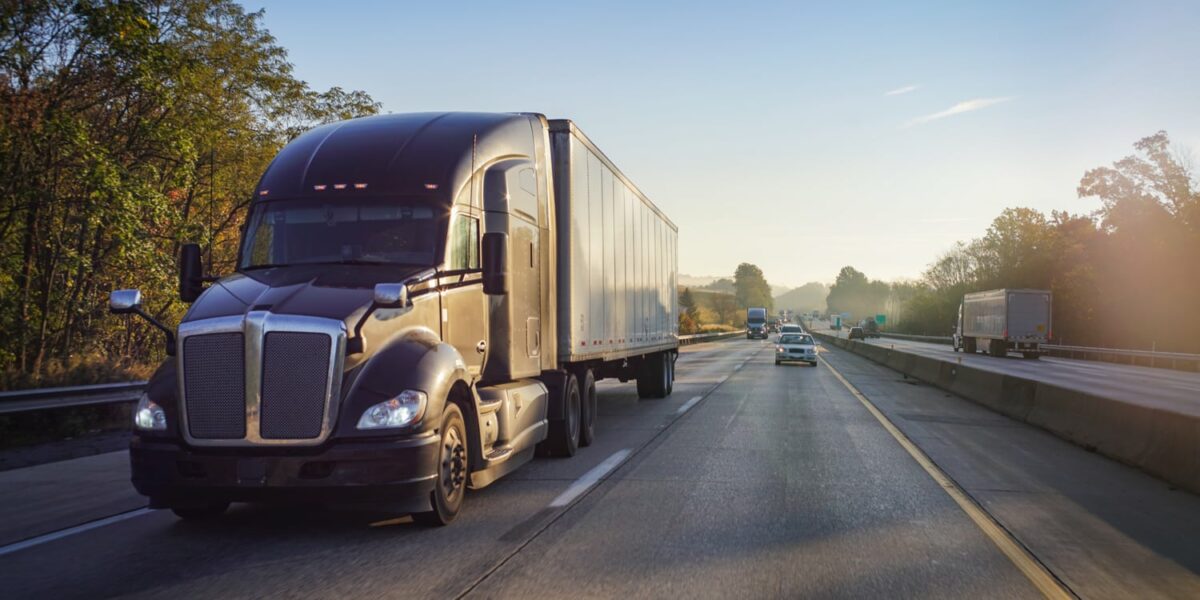
More information about the CDL exam:

Written Test

The written CDL test is in a multiple-choice format. After you pass, you will receive your commercial learner’s permit (CLP) and any applicable endorsements.

General Knowledge Exam

The first part of the written exam is known as the general knowledge test and passing this is necessary to earn your CDL. It covers basic information about how to safely operate a commercial motor vehicle (CMV). Some topics you’ll need to know include regulations for different types of freight, the basic requirements for a pre-trip inspection, and definitions related to CMVs.

Endorsements

Endorsements are additional certifications added to your license. To earn these, you will need to pass additional written tests, which you will take at the same time as the general knowledge exam. Our schools all cover material from the hazardous materials (hazmat), tanker, and doubles/triples exams, and our Fort Bliss location also prepares you for the passenger endorsement test.

Air Brakes

A portion of the written CDL test covers material related to air brake systems. Passing this is necessary to remove the air brakes restriction. You will also need to pass the skills test with a vehicle that has air brakes.

Skills Test

In order to earn your full CDL after getting your CLP, you will need to pass the skill tests. This consists of three parts.

Pre-Trip Inspection

During the pre-trip inspection portion of the skills test, you will need to complete a full internal and external inspection of the CMV you are driving. This involves identifying and checking over 100 different parts of the vehicle.

Basic Vehicle Control Skills

For this portion of the exam, the evaluator will use off-road tests to evaluate your basic semi-truck maneuvering skills. They may choose to test straight-line backing, offset backing to either the left or the right, parallel parking (conventional or driver side), and/or alley dock backing.

On-the-Road Driving

The final part of the skills test requires you to drive your CMV on the road while the examiner evaluates your performance. If certain traffic situations don’t occur naturally on the test route, the administrator may ask you to describe how you would respond.

Prepare for Your CDL Test

While you can study for the CDL exam on your own, attending truck driving school is usually a better option. Many companies prefer to hire program graduates and you also have the advantage of working with experienced instructors who can help answer any questions you may have.

To learn more about how we can help you pass your CDL test, contact us today.

Choosing a Trucking School

If you are looking for a career where you can experience the freedom of the open road and earn great pay, trucking may be for you. There is a shortage of drivers and this high demand translates into increased job stability and the ability to make more than $66,000 a year.* The first step to entering the trucking industry is earning your commercial driver’s license (CDL). Trucking school is the most common way to do this and choosing the right institution can help you start your career with the tools you need to succeed.

Some factors to consider when choosing a CDL school:

Comprehensive Training

A trucking school program should include a combination of classroom and hands-on training. The classroom portion is important for the written CDL test. After you pass this exam, you will earn your commercial learner’s permit (CLP) and should have an understanding of basic trucking safety and operation. Your chosen program should also include actual truck driving and pre-trip inspections and you should be trained with a real semi-truck, not with a simulator.

Experienced Instructors

Instructors are a central part of your experience at trucking school. They should have industry expertise and be able to clearly explain concepts to students. A good way to determine whether the instructors at a given school are a good fit for you is to attend an open house, which may give you the opportunity to meet a few of your potential teachers. You can also talk to current and former students or ask school representatives about the credentials of their instructors.

Endorsements

Depending on the type of trucking you plan to pursue, you may need endorsements. These are certifications added to your CDL. If there are endorsements you know you will need, you should make sure your chosen program includes those. At Phoenix Truck Driving School, we offer hazardous materials (hazmat), tanker, and doubles/triples endorsements at all of our campuses, plus a passenger endorsement at our Fort Bliss school.

Job Placement Assistance

You should check if the school you are interested in has a job placement assistance program. This can make it easier to find a company to work with after graduation. It can also be helpful to look at employment information to see student placement rates.

What About Cost?

While the quality of the program should be your primary concern, cost also plays a role. Keep in mind that trucking school will always have some cost associated with it, whether this is direct in form of tuition or indirect in the form of agreeing to work for a specific company. It is a good idea to do some research, and to also consider what options there are for covering tuition.

Our Trucking Schools

Phoenix Truck Driving School has locations in Arizona, New Mexico, and Texas. We offer high-quality training, and our experienced instructors know how to help students succeed in the industry.

To learn more about our trucking school programs, contact us today.

*Professional truck drivers earn a mean annual wage of $46,370. The top 10% of truck drivers make more than $66,840 per year according to the 2019 Bureau of Labor Statistics.